 Vanoor
Guide
Apple Watch Series 12 and Ultra 4 for running: what actually changed, and which one a runner should buy
On this page
Apple announced the Series 12 and Ultra 4 on 9 September 2026 and put them on sale on the 18th. Most of the coverage is about cases, bands and prices. This page is only about running: what changed that a runner will actually feel, what did not, and which of the two is worth the money if your watch spends its weekends outdoors.
The short answer
The headline for runners is battery. A Series 12 now records 10 hours of outdoor GPS workout where a Series 11 managed about six or seven. That single number moves the Series line from "fine for a marathon" to "fine for almost any race you will enter". The Ultra 4 goes to 18 hours, which covers a 100 km day outright.
| Series 12 | Ultra 4 | |
|---|---|---|
| Price from | $399 | $799 |
| Outdoor workout with GPS | 10 h | 18 h |
| Extended workout mode | 25 h | 45 h (Max Extended) |
| Everyday use | 24 h | 50 h |
| Low Power Mode | 38 h | 84 h |
| GPS | Precision L1 | Dual-frequency L1 + L5 |
| Display | 2,000 nits | 3,000 nits |
| Case | 42 / 46 mm aluminium, titanium, ceramic | 49 mm titanium |
| Water | 50 m | 100 m, scuba to 40 m |
| Chip | S11 in both | |
Apple's published figures, checked 23 September 2026.
What changed that you will feel on a run
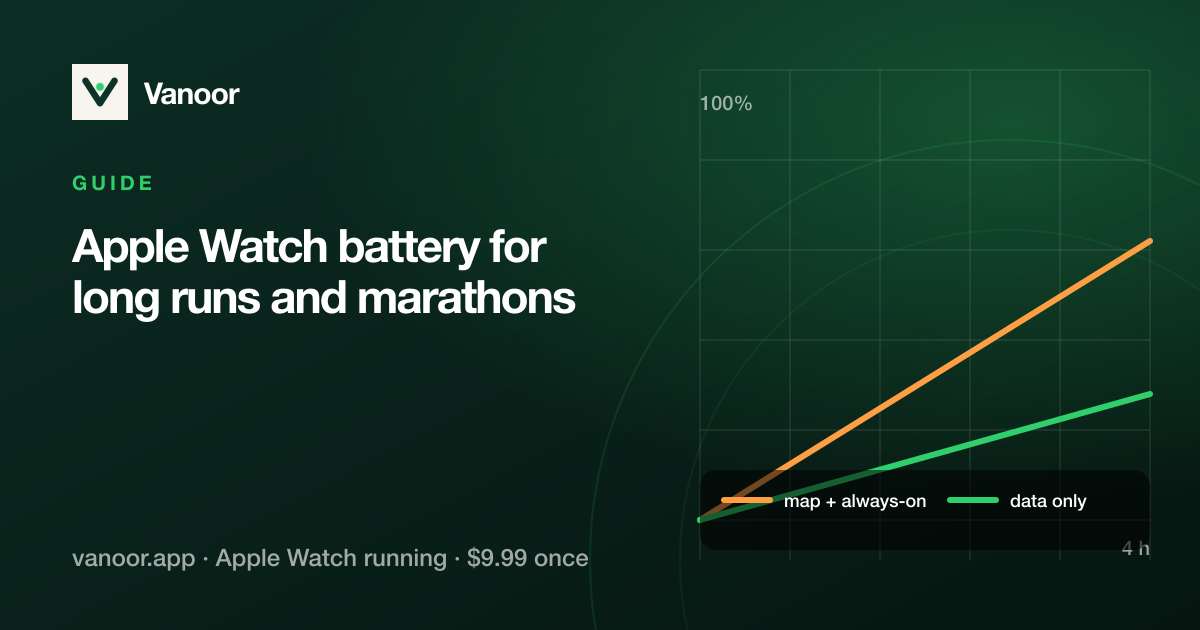
1. The long run stopped being a battery calculation. On a Series 9 to 11, a six-hour day meant Low Power Mode, a dimmed screen and leaving the map page alone. Ten hours changes the planning: a four-hour marathon now ends with most of the charge intact even with the screen bright and a map open at junctions. If you have been rationing features on long runs, you can stop. The battery guide has the updated numbers for every model and the settings that still matter.
2. Dual-frequency GPS is still Ultra-only. The Ultra 4 receives L1 and L5; the Series 12 receives L1 only. This is the difference you see in city centres between tall buildings and on switchbacks under dense tree cover — the places where a single-frequency track wanders off the path and hands you a distance that is 200 m long. On open roads and parks the two are indistinguishable. If most of your running is urban canyon or technical trail, this is the strongest argument for the Ultra that is not about battery. See the trail guide for what it looks like in practice.
3. A new heart-rate sensing system, measuring every five seconds. Both models share it, along with Readiness, Recovery HRV and daytime vitals. A faster sampling interval helps most where wrist sensors have always struggled: the first minute of an interval, when heart rate is climbing fastest. It does not turn the wrist into a chest strap — for interval sessions judged on heart rate, a strap is still the honest answer, and both watches pair with one. The chest-strap guide covers when it is worth it.
4. The brighter Ultra screen, in the sun. 3,000 nits against 2,000 is not a specification you think about until you are looking at a pace number at noon in July. Both are readable; the Ultra is readable without shading it with your other hand.
What did not change
- Apple's Workout app still cannot follow a route. Neither watch will show you a GPX line, an offline map or an off-course warning out of the box. That is a third-party job on every Apple Watch, new or old — see how GPX routes get onto the wrist.
- Both run the same S11 chip. There is no performance difference between them for running; the gap is battery, GPS, screen and case.
- Structured workouts and race pacing are the same story: basic in Apple's app, complete in an app built for it — intervals and race pacing.
Which one should a runner buy?
- Series 12 ($399) — road running, 5K to marathon, any distance that fits in ten hours. The ten-hour workout battery removes the only real reason a road runner used to reach for an Ultra. Buy the 46 mm if you like a bigger dial for pace at a glance.
- Ultra 4 ($799) — ultras, mountains, technical trail, or urban running where the track quality bothers you. Dual-frequency GPS, 18 hours of workout, 100 m water rating and the brightest screen. Also the choice if you want one watch that survives a weekend away from a charger.
- Upgrading from a Series 9, 10 or 11? Only the battery is a step change. If your runs are under about five hours and you charge nightly, your current watch is not holding you back — a better running app will change more about your running than a new watch will.
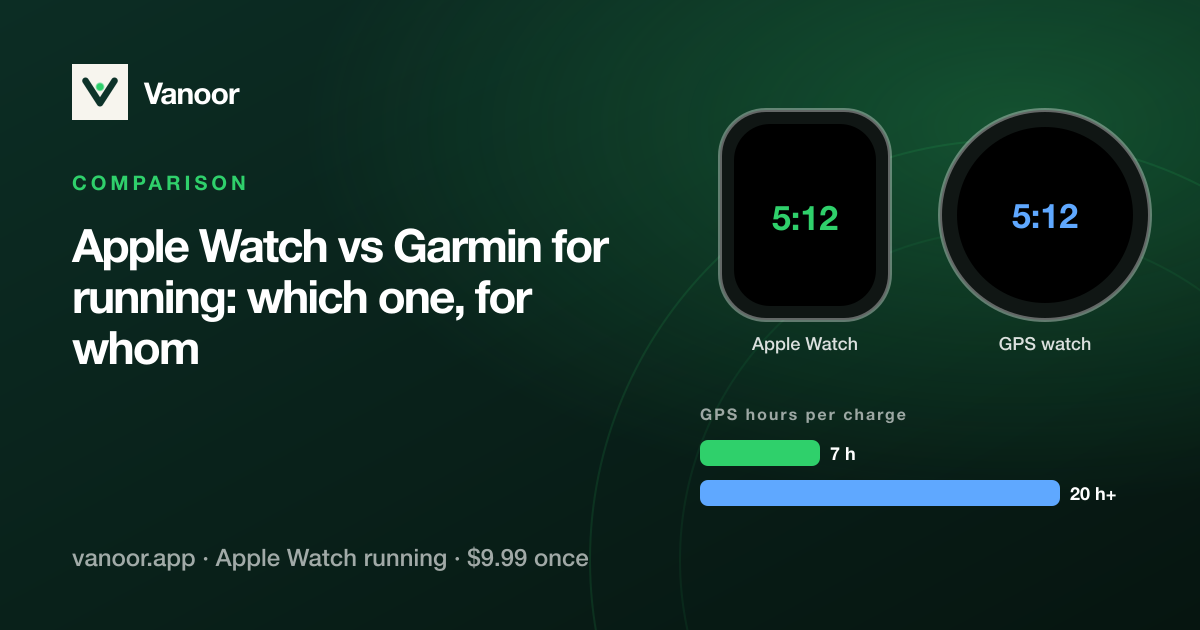
- Considering a Garmin instead? The Ultra 4 narrowed the battery gap a lot, but a Fenix 9 still goes 30 hours of GPS. The full comparison is in Apple Watch vs Garmin for running.
Set a new watch up for running
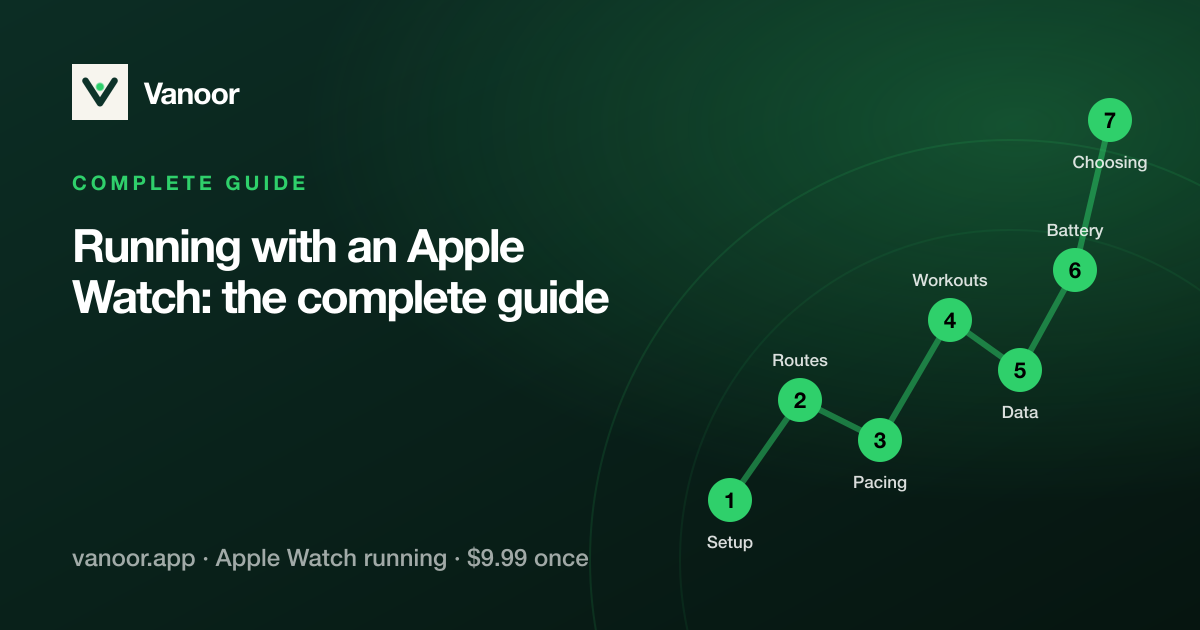
Whichever you unbox, three things are worth doing before the first run: choose what each data screen shows, set your heart-rate zones from your age or a measured max, and — if you follow routes — put a GPX on the watch with its map attached so the phone can stay at home. The complete guide walks through all of it in order.
Series 12 and Ultra 4 for running — quick answers
How long does the Apple Watch Series 12 last on a run?
Up to 10 hours of outdoor workout with GPS, and up to 25 hours in Extended Workout mode. A four-hour marathon uses well under half of it.
How long does the Apple Watch Ultra 4 last on a run?
Up to 18 hours of outdoor workout with GPS, and up to 45 hours in Max Extended Workout mode — enough for a 100 km race without a charge.
Is the Ultra 4 worth $400 more than the Series 12 for running?
If you run ultras, technical trail or in a dense city, yes: dual-frequency GPS and 18 hours of battery are real advantages. For road racing up to the marathon, the Series 12 does the same job.
Does the Series 12 have dual-frequency GPS?
No. The Series 12 uses precision L1 GPS; dual-frequency L1 + L5 is Ultra-only.
Can the Series 12 or Ultra 4 follow a GPX route?
Not with Apple's own Workout app — that has no route following on any model. With an app built for it, both show the route line, an offline map and an off-course warning with no phone nearby.
Sources
- Apple. Apple Watch Series 12 — Technical Specifications. apple.com/apple-watch-series-12/specs
- Apple. Apple Watch Ultra 4 — Technical Specifications. apple.com/apple-watch-ultra-4/specs
- Apple. Compare Apple Watch models. apple.com/watch/compare
All hardware figures on this page are Apple's own published specifications, read on 23 September 2026. Real-world battery life varies with model, age, screen settings and the app you run.
Every figure in the chart and the answers above is computed from the race distance (21.0975 km) and the goal time, then rounded to the second — nothing here is copied from another chart. The generator is half_marathon_chart_html() in this site's build script.
Related guides
Picked by shared topics.
Keep the Watch. Upgrade the run.
Vanoor — offline route navigation, race pacing and structured workouts on the Apple Watch you already own.
Get Vanoor 7-day free trial · $9.99 once, no subscription · no account